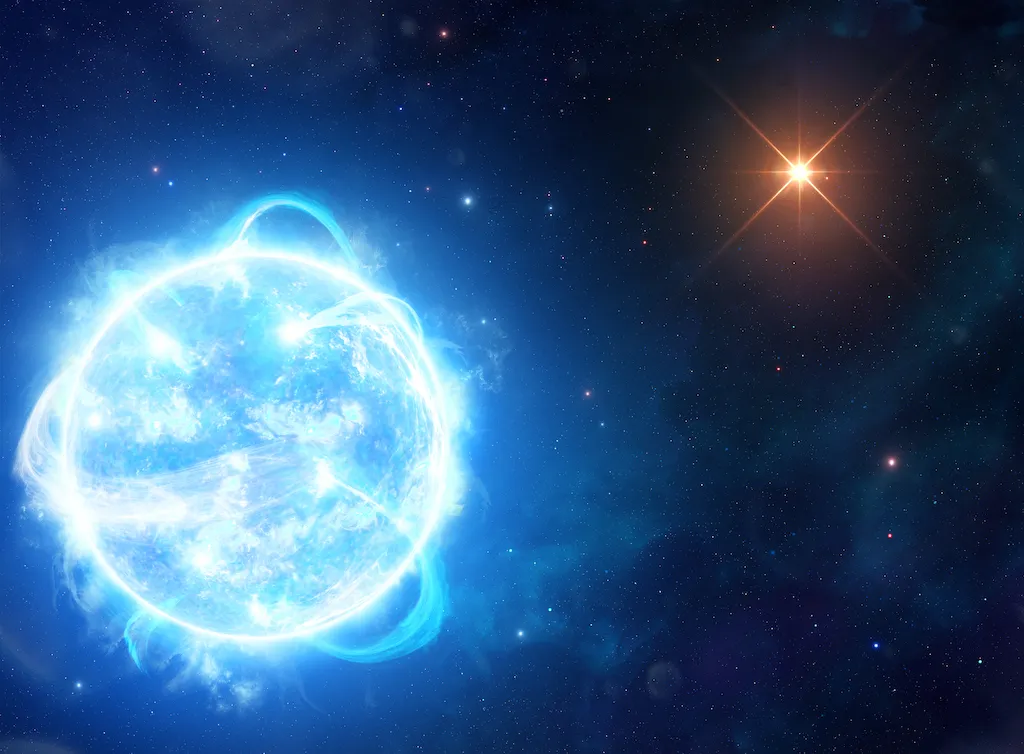
A Star is Born
All stars are formed in nebulae. Nebulae are clouds of gas and dust in space, often known as "space nurseries", because that's where the baby stars live! This is practically the only part of the lifecycle which all stars have in common.
Fuel Consumption
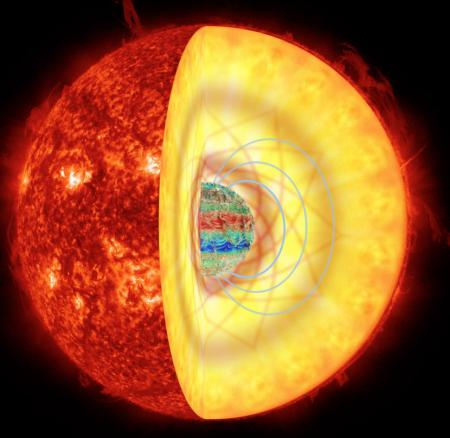
The rest of the lifecycle depends on the mass of the star. The more mass a star has, the shorter its lifespan. This is because stars have a certain amount of fuel hydrogen in their cores. Fuel is used by nuclear reactions, specifically, nuclear fusion. Nuclear fusion is when two atoms are forced together under the extreme pressure and temperatures of the star's core, to form an atom of a different element. Elements lighter than iron (Fe) were all formed in stars.
Larger stars finish up the fuel quickly, while smaller or medium sized stars, like our sun, tend to burn up more slowly, therefore living a longer life.
Dimming out
As the hydrogen begins to run out, the star enters the last phase of its life, as a red giant (in average stars) or a red supergiant (in massive stars). Now the star's fate is determined by its size.
Smaller stars: Planetary nebula phase, then a white dwarf phase until it finally dims out into a black dwarf.
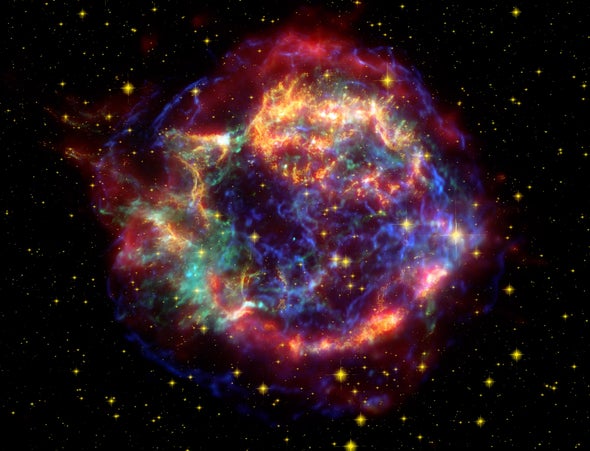
Larger stars: Explodes into a magnificent supernova! The material from the supernova can collect in nebulae, and get recycled into new stars. After the dust clears, a neutron star is left behind, with streams of radiation, called pulsars.
Massive stars: Explodes into a black hole!
And thus, ends our saga.
BracketRocket's note:
I know this post is more than a slight departure from my usual content, and I haven't posted in quite a while.
But we've been moving continents! It's a brand new country with brand new people and oddly enough, brand new ways of communication. I've made a bunch of interesting observations, which deserve a post of their own. Anyway, don't worry, OnlyRedHerrings is back now, and I'll try my best to establish a bit of a consistent posting schedule here.
Now, as to why I made this post. There are a lot of reliable articles or books (on the internet or otherwise) for discussing this topic, but very few do it with clarity for the average person. It's expected to be common information, which is understandable, because at the very base it's rather simple. But few articles actually address it. So there you go.
I do have plans on making a longer (more detailed) post in the future on certain parts of this life cycle. I'll add a link here if I do.
Thanks for sticking around!
-BracketRocket
Comments
Post a Comment