
Shakespeare and Subjectivity (or the lack thereof)


“The tartness of his face sours ripe grapes.”

The Comedy of Errors (Act 5, Scene 4)


Shakespeare is no saint. All of his plays have a little something against our "modern values", and honestly, it's irrational to be surprised. 

The "Bard of Avon", inventor of most of modern vocabulary, lived from 1564 to 1616. Society four hundred years ago upheld different beliefs and ideals, some which we have retained today, but even more that we 'pooh-pooh' or find straight-up offensive.
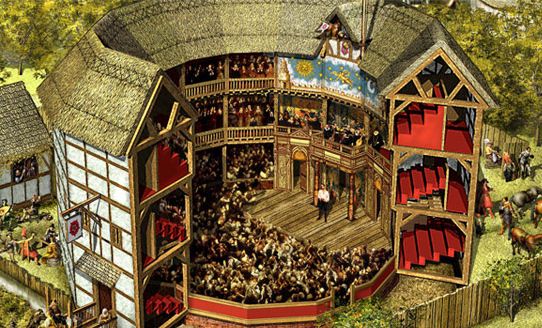

Elizabethan theatre was...quite a big deal

Fiction is a reflection of fact, and fact is a reflection of fiction. When we bring up various issues in Shakespeare's works, are we critiquing the playwright, or the society he was lived in?

Case in point: Merchant of Venice.

Rampant antisemitism against Shylock the Jewish moneylender. When his daughter elopes and converts to Christianity, it is shown as a positive outcome and an ideal "happy ending". 

Portia, the oh-so-smart-and-pretty-and-rich is unabashedly xenophobic and racist. Most of the characters are inherently classist, i.e., Shylock's poverty is apparently more than enough evidence for him to be the villain.

Bassanio, the dashing hero, treats Portia as no more than a commodity whose father's death has brought him good fortune. Portia is forced to disguise herself as a man at the end of the play to control her own fate, indicating that only women adopting male roles can have agency.
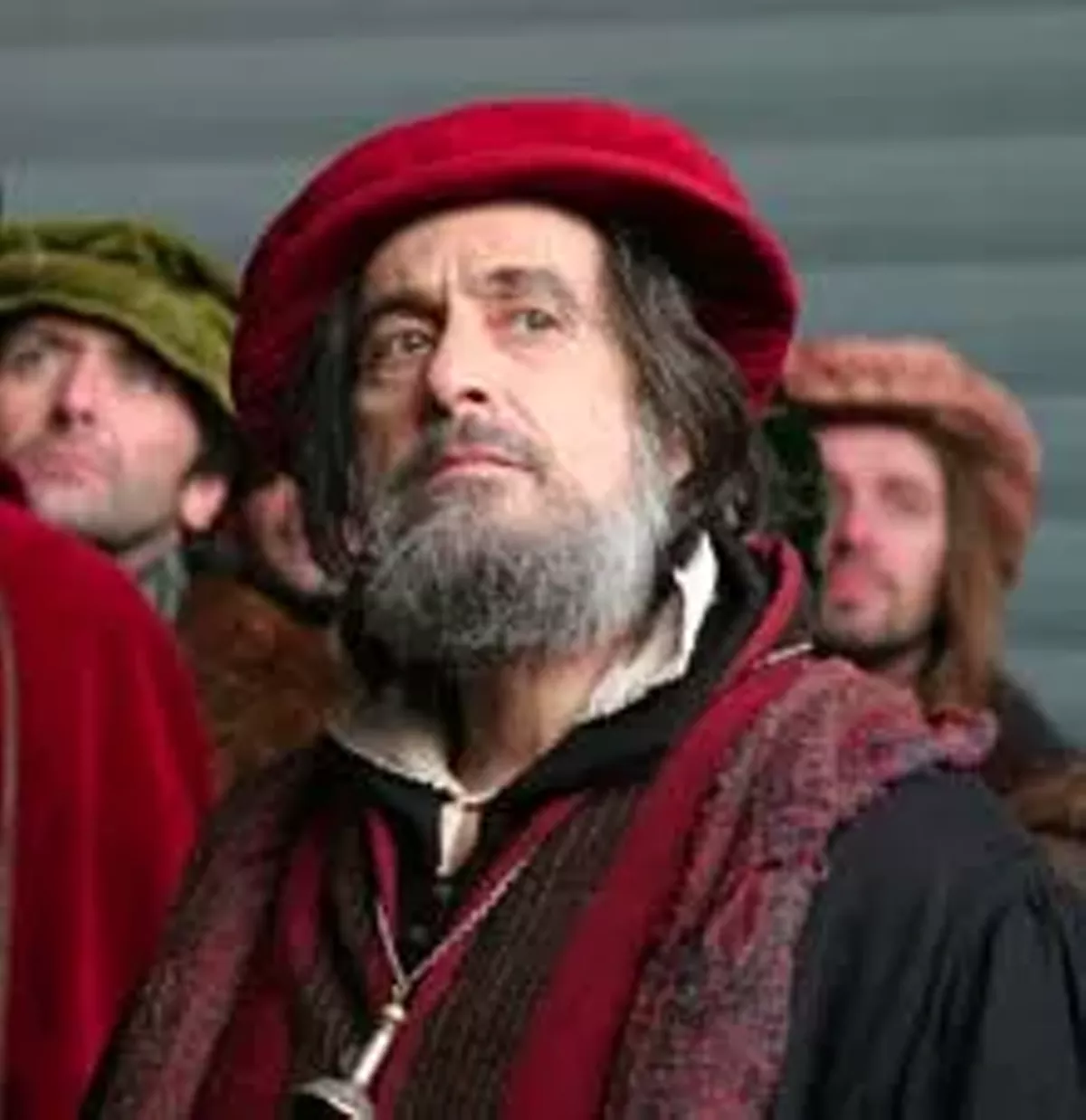

“

I am a Jew. Hath not a Jew eyes? 
If you prick us do we not bleed?
If you tickle us do we not laugh?
If you poison us do we not die?
And if you wrong us shall we not revenge?
"

Shylock's promise, Merchant of Venice (Act 3, Scene 1)


So the question is : who do we blame? Who do we bawl our eyes out at? Who do we direct our grievances towards?


Suppose after many years, you stumble across one of your childhood favourite restaurants. Nothing has changed - not the cooks, not the menus, not the atmosphere, not even the food itself. 

You sit down and order what you remember to be your favourite dish. Your nostalgic memory reminds you of the wonderful flavours you experienced from it.


At long last, it arrives and lo and behold - it is far below underwhelming. Who do you blame?
Do you blame the cook? 
Do you blame the ingredients and recipe?
Do you blame the delightful outside food which has exposed you to the blandness of the original dish?
Do you blame yourself for rose-tinting such an ordinary thing with nostalgia?

Are you sure porridge isn't made of rainbows?


Whose fault is it?

Must we blame someone?

Is it really that necessary to find a scape goat?

Why can't we simply observe? Why is it so difficult for the human psyche to perceive without judgement? 

How about we look at Shakespeare's work and say: "Well, that's how it was. This is what it's like now. It's a trifle better, but we've got a long way to go."

There is no limit to improvement. Let us observe the past, note how the hurdles were overcome, and set our sights on the future.


-BracketRocket

Note: This was basically one long ramble. Thanks for sticking around! Your patience is appreciated and much envied.

Comments

  1. Happy to see one of my favourite Shakespeare lines made the cut! Again your posts force me to question my perception of society and the world around me, and confronting the truth of ye ol'den days. Truly beautiful writing, I'm eagerly awaiting the next post (exit pursued by a bear)

    ReplyDelete
    Replies
    1. Hehe, egg-stabbing for the win! People tend to put Shakespeare on an unshakeable (had to do it) pedestal, but what's the point of being as widely read as he is, if we don't question his beliefs?
      Thanks so much for the comment and also; quick life hack - to escape a bear, gremlin-walking is ideal :)

      Delete
    2. I completely agree, we should question authors and literature as it forces us to gain understanding of societal standards of the time, while allows us examine the importance and the purpose of the piece. I'll keep the life hack in mind when being chased, and enter my gremlin era (assuming I'm not currently there)

      https://www.google.com/url?sa=i&url=https%3A%2F%2Fwww.reddit.com%2Fr%2FNatureIsFuckingLit%2Fcomments%2Fen0bl7%2Fbrown_bear_running_at_full_speed_they_have_been%2F&psig=AOvVaw3SL-FKHup2zSpkG4iuaLpc&ust=1699926022781000&source=images&cd=vfe&opi=89978449&ved=0CBIQjRxqFwoTCKj1uYrsv4IDFQAAAAAdAAAAABAD

      Delete
    3. Yeah, to full appreciate a piece one has to look at the context - and not just the context of the author. If you switch it around and adopt different perspective, it tends to have very curious results - and curious results are peak literature!
      Gremlins are great, honestly. And if you ARE in that era, I hope you enjoy it for as long as you possibly can.

      30 MPH?! That's 48.3 kmph, and Usain Bolt's top speed is 43.99 kmph! Good god nature is cool!

      Delete
  2. the bear is speed.

    https://images.ctfassets.net/pujs1b1v0165/3zi8YuHlYFL5x9DxGhII3C/3c1b44fbda89b6ec14c1be61248f9822/how_fast_can_bears_run_.jpg?w=1280

    ReplyDelete

Post a Comment

Popular posts from this blog

The Infinite Monkey Theorem

  I know, I know. The name sounds incredibly made up. It is  made up, isn't it? Everything humans use to communicate with each other is made up. Well then, it is a made up theory. Just, I didn't make it. Simply put, the Infinite Monkey Theorem states that if you let an immortal monkey hit keys on a typewriter keyboard for an infinite period of time, the monkey will be able to type out the entire works of Shakespeare, along with all pieces of literature of the past, present and future, an infinite number of times. Creation! French mathematician Émile Borel is credited with popularizing a similar concept in 1913, although some people attribute the original idea to Aristotle. Émile Borel Under the same conditions as before, Borel wanted to calculate the probability of the monkey typing a specific sentence. He said that the chances of the monkey typing the sentence in a finite amount of time is extremely small, but it becomes possible if the monkey continues typing indefinitely. C...

The Legendary Solar Eclipse

 8th April, 2024. Not an ordinary day. It is the date of the full solar eclipse, that will pass over regions of North America. The sky will darken (I sound like a Nostradamus rip-off with an Internet connection, but bear with me), akin to dusk or dawn, and if one is lucky enough to have clear skies, the corona (outer atmosphere of the sun) should be visible in an awe-inspiring ring around the shadow of the moon.  Truly a sight to behold Of course, not all visible things are meant to be seen. Not with naked eyes anyway. If you happen to be within the range of this celestial event, by all means, enjoy it - but with the necessary safety precautions in place. Looking at the sun in such a state (or otherwise, actually) directly, or through a telescope/camera/binocular lens is bound to cause severe, and oftentimes untreatable, eye injury.  You have an excellent brain. Use it. Implement indirect means of viewing. Look at it through a pinhole camera, or safe solar viewing glasses...

Running out of Turing Tests

In his laconically named 1637 treatise,  Discourse on the Method of Rightly Conducting One's Reason and of Seeking Truth in the Sciences , René Descartes argued that while a mechanical body could imitate human behaviour if it so wished, true thought (therefore true being) was exclusive to the res cogitans –  the thinking substance – which machines could never possess.  One wonders if this was taken as a challenge, and (separately) if it was meant to be one. In the centuries to follow, mechanistic fantasies could only further proliferate the living world. Jacques de Vaucanson's grain-kernel-digesting-and-excreting duck from 1764, for instance – deft as it was in its intended simulation – marked the beginning of the hunt for the line between imitation and genuine cognition.  An American artist's (incorrect) explanation for how the duck managed to eat and excrete grain. On inspection some half century down the line, a French illusionist concluded the it did not, as...

Tackling Absurdism

You are a complex and nuanced individual. You have layers to your personality. You meet multiple people daily, you have so many experiences. You have a story to tell, your interests, aspirations, hopes and dreams.  You may sometimes feel like you're the most complicated being on earth. After all, you have so much going on, don't you? But so does everyone else. Everybody else has their own stories, problems, dreams. Everyone else thinks they're a complex person. And that's because they are. We live in a complex world, after all. All this, for what? What even are we, a swarming bunch of self-righteous, self-absorbed microbes on a rock in the middle of nowhere? What is the meaning of life? What's the point anyway? Every single action that happened since the beginning of the universe, right from the big bang, every slightest choice has led up to this - upto your reading this blogpost. The smallest difference would have changed this outcome vastly. Our present is a mosai...

Thomas Edison and the Cyclicity of Pulp

The only thing more fascinating than pulp fiction is the contemporary commentary – condemnation? – of whatever genre it exemplifies at a given period of time, and the subsequent pedestal-perching of said genre by posterity. For this, of course, I use a more expansive definition of ‘pulp fiction’ than is generally recommended. Pulp fiction (as generally recommended) refers to stories published in pulp magazines, which were cheap, long-running fiction series printed on rough wood-pulp paper. ‘ Generally recommended ’ The pulp fiction I refer to is more all-encompassing: anything popular, cheap, aimed at a younger audience and ‘sensationalist’. (The last descriptor I dislike as an adjective for fiction; I believe it ought to restrict itself to journalism, where its services are necessary and its application plentiful, but I digress.) A better term might be contemporary fiction, but that flowery ornateness doesn’t quite capture the plosive gun-shotty decadence of good-for-nothing kids-the...

The Question of Free Will

 “The ultimate question of life, the universe, and everything” was never really defined as a question, which is why Douglas Adams' Hitchhiker's Guide to the Galaxy delights in answering it with “42.” A fittingly nonsensical answer for a fittingly nonsensical question.  This is an error that some may deem deliberately obtuse – therefore an error that I will try my best to avoid. To answer a question, it would seem, one's first step must be to ask it. And here is what I ask: Can physics tell us if we have free will? A straightforward question that cannot be answered with nonsense justifiably. But the devil is in the details, and it is the moral onus of the curious to get to them first. Our most capital specimen of a question raises two others of its kind.  Who is ‘we’? What is ‘free will’? The former is a subjective to the speaker's context, i.e., something under our control. I take this opportunity to restrict it to the human race. Animals, plants, amoebas and the cup of...

This is a Warning, not an Invitation

  "Hey! Look at this virtual reality headset! If we spend enough time with these things, our world is going to be just like the world of Ready Player One!" "Are you excited?" "Of course!" "...why?" Ready Player One, regardless of whether you're referring to the book or the film, is a piece of dystopian science fiction. That means the world of Ready Player One sucks . It's not something we should aspire to emulate. Ready Player One, and every other piece of dystopian fiction, is a warning, not an invitation.  Is it that hard to digest? Look at where you come from, look at you now In the ever-expanding landscape of technological progress and societal shifts, dystopian fiction has emerged as a powerful mirror reflecting our collective fears, anxieties, and cautionary tales about the future.  Works like George Orwell's "1984" and Aldous Huxley's "Brave New World" have long served as harbingers of potential dystopia...

2001: A Movie Review

This is from 1968? And I'm expected to believe that?   July 20th, 1969. A truly astronomical feat of humankind. Neil Armstrong and Buzz Aldrin became the first people on the moon, as millions of folks watched, absolutely enraptured, from their TVs sets here on good ol' Earth.  And, like most historic monuments in our scattered timeline of existence, popped up the omnipresent scatterbrains - the conspiracy theorists. Because, well, why shouldn't they? There's always an xkcd for that As I was doom scrolling through the Wikipedia article concerning itself with this delightful topic, one thing stuck out to me - a name .  There was one singular  name on the entire blasted index box.  The name was Stanley Kubrick.  It was fuzzily familiar, and a few quick clicks revealed why. The poor fellow had had the misfortune of directing a "cinematic masterpiece", a true trailblazer who walked so every other space movie could run - Stanley Kubrick was the director of 2001: ...

Did Roald Dahl predict ChatGPT in 1953?

"Person? What person?" Roald Dahl is a classic childhood author for many. He is known for his contribution to children's literature in the form of books like Charlie and the Chocolate Factory, James and the Giant Peach, The BFG and my personal favourite, Matilda , to name a few. But yesterday at the Library, walking up and down the science fiction section, my eyes were led astray by an unfocused mind. In a quirk of human nature, the mind is automatically drawn towards the familiar, especially when not paying attention on the present circumstances. That's why we turn back to look at a familiar face in a crowd.  Perhaps it is an evolutionary characteristic. I cannot say for sure. My eyes had come to rest on a small volume, lying in a state of almost meditative serenity in the "Short Stories" section. The little black spine bore golden letters in Times New Roman, and it said in a form of modest pomposity which only that font is capable of "Someone Like Yo...